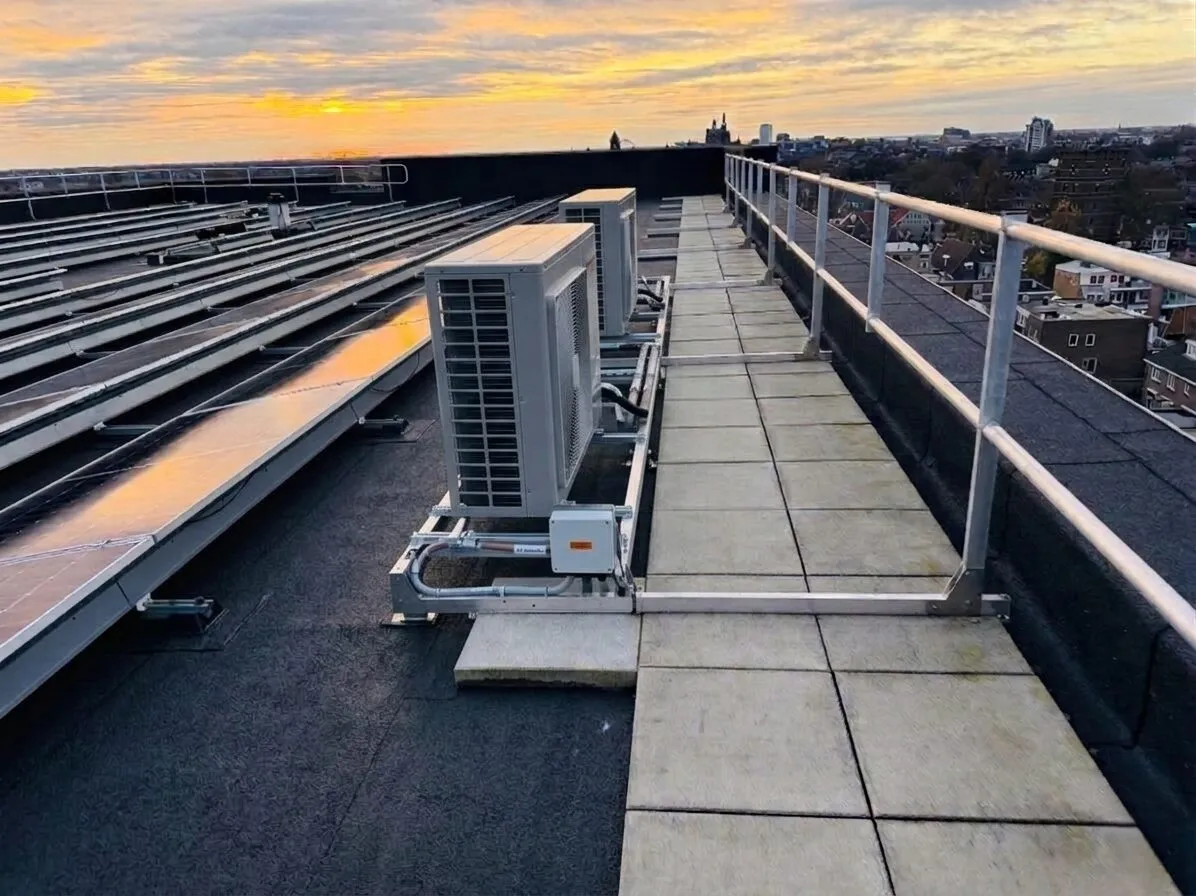
Roof safety under scrutinyunder scrutiny
Was a permanent collective solution technically possible? If the answer is yes, that becomes the reference point in every legal assessment — by authorities, insurers and courts. Cost arguments are irrelevant. Liability does not disappear after handover.
Liability does not disappear after handover
Building owners hold long-term responsibility. Safe maintenance is not optional — it is a legal requirement. The obligation to ensure safe maintenance is anchored in building regulations and maintenance requirements.
When recurring roof use is foreseeable, safe access must be structurally integrated. Where this has not been done, responsibility remains with the owner — even after handover, sale or change of ownership.
Building regulations require that a building is designed so that maintenance can be carried out safely. Safe-maintenance checklists explicitly require substantiation of the safety measures selected.
Civil liability
Criminal liability
Insurance disputes
Operational disruption
Reputational damage
A one-time permanent perimeter solution reduces decades of exposure. Lowest lifecycle cost across 50 years.
When a roof is deemed defective
Under civil law a building owner may be liable for damages caused by a defective structure. A roof without adequate collective fall protection may be considered a defective state when recurring maintenance is foreseeable.
Courts assess
- Was the risk foreseeable?
- Were safer technical measures available?
- Were collective measures technically feasible?
Insurers investigate
- Foreseeability of the risk
- Conformity with the safety hierarchy
- Availability of collective measures
The critical test
If a permanent guardrail was technically possible but not installed, that becomes the reference point.
Anchor-only solutions are difficult to defend in that scenario.
The STOP principle — mandatory order
Collective technical measures take priority over personal fall protection. Personal fall-arrest systems are only permitted when higher-order measures are technically impossible. This is not a recommendation — it is the legally required order.
Source control. Highest priority.
Collective measure.
Permanent roof-edge protection.
Procedures, instructions, supervision.
PPE / harness. Only when higher measures are impossible.
On flat roofs with recurring maintenance, collective roof-edge protection is technically feasible — and therefore required. This principle is anchored in European and national safety frameworks and reinforced by DGUV guidelines.
What was once incidental is now structural
Energy regulation requires advanced building automation in large non-residential buildings. More monitoring means more service visits. More service visits mean structural roof access.
HVAC units, heat pumps, solar panels and BACS-driven monitoring make recurring maintenance foreseeable. Foreseeable recurring roof use fundamentally changes the legal assessment.
EPBD requirements make recurring technical roof use foreseeable. Foreseeable use requires structural protection — no temporary measures, no personal protective equipment as the primary measure.
Solar PV
HVAC systems
Heat pumps
BACS-driven monitoring
Technical infrastructure
“Structural roof use requires structural protection.”
When a roof is assessed as deficient
What courts assess
Was the risk foreseeable?
Were safer measures available?
Were collective measures technically feasible?
What insurers investigate
Foreseeability
Compliance with the safety hierarchy
Availability of collective measures
The documentation standard
Structural report
Test compliance
Installation protocol
“Was a permanent collective solution technically possible?”
Liability remains active and acute.
Personal anchor-based solutions are considered a “last resort” in legal practice. Every visit creates a potential compliance gap and unmitigated civil risk.
Highest legal order achieved.
Structural protection is always present, eliminating human error as a liability factor. Full Eurocode documentation closes every compliance gap.
What authorities and insurers assess
Temporary or PPE-based protection
- Temporary guardrails documented
- Personal anchor systems as the primary measure
- No permanent edge protection
- No project-specific wind-load calculation
→ Authorities and insurers assess whether a permanent collective system was technically possible. Deviation must be substantiated. Without substantiation, exposure increases.
Permanent collective system
- Permanent guardrail per Eurocode
- Project-specific wind-load calculation per EN 1991-1-4
- Documented compliance references
- Traceable design decisions
- Declaration of Performance (DoP)
→ Legally defensible design. Documented choice.
Risk analysis
- Risk analysis & design-phase decisions
- Available technical solutions
- Industry standards at the time of construction
- Conformity with the safety hierarchy
- Structural wind-load verification
Make your building legally defensible
Temporary edge-protection standards are intended for the construction phase. The maintenance and use phase requires structural assessment and wind verification. Without a project-specific structural calculation, a system may not withstand the required wind loads.
Protector Guardrail integrates safety in the design phase — no after-the-fact correction, no temporary compromise.
- ✓Technical documentation
- ✓Project-specific wind-load calculations (EN 1991-1-4)
- ✓Compliance references
- ✓Specification texts
- ✓BIM / IFC files
- ✓Traceable design decisions
You can justify your design.
You can justify your installation.
You can justify your building.
Liability is not about price — it is about what was technically possible
Roof-edge protection is a non-negotiable requirement for safely maintained roofs. Permanent. Engineered. Defensible.
Know your legal exposure
The European hierarchy of controls determines how your roof is assessed in law. Review the binding order or request your legal documentation.